
Scientific Evidence, Safety Considerations, and Raw Material Sourcing for Manufacturers
Melatonin is widely recognized as a key hormone involved in regulating the human sleep–wake cycle. Over the past decade, melatonin supplementation has gained global popularity—not only among consumers seeking better sleep, but also among supplement brands, nutraceutical manufacturers, and functional food developers sourcing melatonin as a raw material.
However, melatonin is not a simple “sleep aid.” Its physiological role, safety profile, dosage considerations, and raw material quality vary significantly depending on formulation, purity, and regulatory compliance.
This article provides an evidence-based, non-promotional overview of melatonin supplementation, with a specific focus on ingredient quality, application scenarios, and procurement considerations for professional buyers. No medical claims are made.
What Is Melatonin? A Brief Scientific Overview
Melatonin is an endogenous hormone primarily synthesized by the pineal gland in the brain. Its secretion follows a circadian rhythm, increasing in response to darkness and decreasing with light exposure.
Physiologically, melatonin acts as a biological time signal, helping synchronize the body’s internal clock with the external day–night cycle. This role explains why melatonin is frequently studied in relation to sleep timing, circadian rhythm disorders, and jet lag.
Unlike sedatives, melatonin does not induce sleep directly. Instead, it supports sleep onset timing by signaling nighttime to the body.
How Melatonin Works in the Circadian System
Melatonin production is regulated by the suprachiasmatic nucleus (SCN), often described as the body’s “master clock.” Light exposure—especially blue light—suppresses melatonin synthesis.
Key functional mechanisms include:
Regulation of sleep onset latency
Synchronization of circadian rhythm under disrupted light cycles
Adjustment to time zone changes and shift work schedules
According to NIH-reviewed literature, melatonin primarily affects sleep timing rather than sleep duration or depth, which is an important distinction for both product positioning and regulatory compliance.
(Source: National Institutes of Health – NCCIH)
Evidence-Based Benefits of Melatonin Supplementation
1. Support for Sleep Timing and Onset
Multiple clinical studies suggest that low-dose melatonin may help reduce the time required to fall asleep, particularly in individuals with delayed sleep phase patterns.
A meta-analysis published in Sleep Medicine Reviews reported modest but consistent effects on sleep onset latency.
(PubMed ID: 21185157)
2. Circadian Rhythm Adjustment (Jet Lag & Shift Work)
Melatonin is most commonly studied for circadian rhythm realignment rather than general insomnia. Evidence supports its use in:
Jet lag adaptation
Shift work–related circadian disruption
The CDC and NIH both acknowledge melatonin’s role in circadian rhythm management when properly timed.
3. Antioxidant and Chronobiotic Properties (Emerging Research)
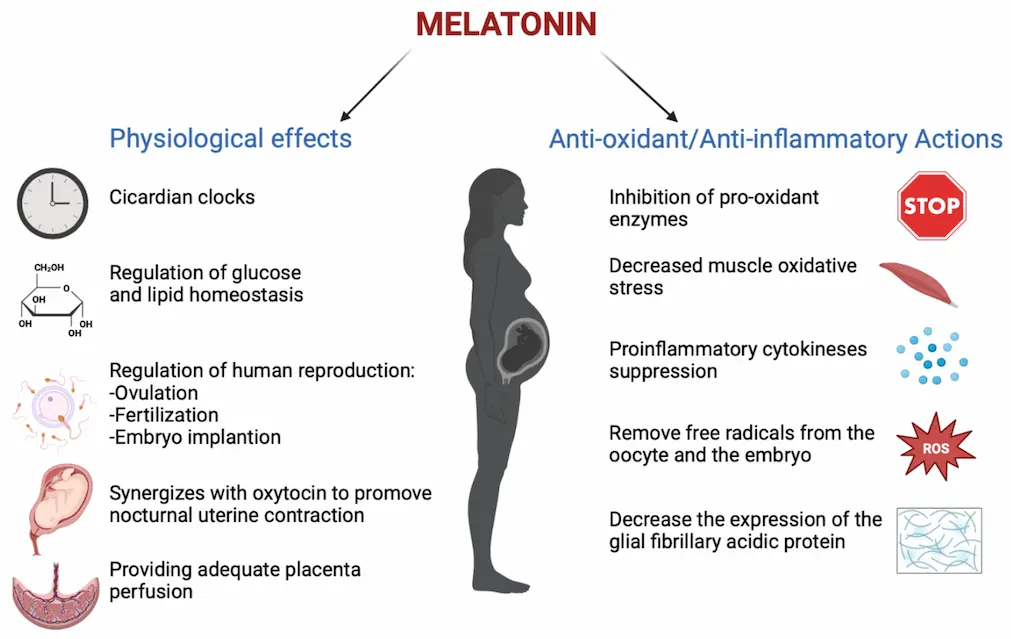
Laboratory and preclinical research suggests melatonin has antioxidant activity and interacts with cellular signaling pathways related to oxidative stress. These findings are not clinical treatment claims, but they contribute to ongoing interest in melatonin beyond sleep-related applications.
(Source: PubMed Central)
Potential Risks and Safety Considerations
Common Short-Term Side Effects
Reported side effects are generally mild and reversible:
Daytime drowsiness
Headache
Dizziness
Gastrointestinal discomfort
The U.S. FDA categorizes melatonin as a dietary supplement, not a drug, which means label accuracy and purity can vary significantly between suppliers.
Long-Term Use: What We Know (and Don’t Know)
Long-term safety data on chronic melatonin supplementation remains limited. Regulatory agencies such as the NIH emphasize caution with prolonged use, particularly without professional supervision.
This uncertainty highlights the importance of controlled dosage, purity testing, and transparent labeling at the ingredient level.
Drug Interactions and Special Populations
Melatonin may interact with:
Anticoagulants
Immunosuppressive therapies
Antidiabetic medications
It is generally not recommended for pregnant or breastfeeding individuals due to insufficient safety data.
(Source: NIH – NCCIH)
Dosage Considerations (Non-Medical Overview)
From a formulation and compliance perspective:
Typical adult supplemental dosages range from 0.5 mg to 5 mg
Higher doses do not correlate with increased effectiveness
Lower doses are often preferred in circadian rhythm applications
Importantly, raw material consistency and accurate dosing depend heavily on ingredient purity and analytical verification.
Quality Challenges in Melatonin Supplements
Independent studies have shown that commercial melatonin products may contain significant deviations from labeled content, sometimes exceeding declared dosages by several hundred percent.
This creates compliance and reputational risks for brands.
Key quality factors include:
API-grade purity
HPLC assay verification
Residual solvent control
Heavy metal and microbiological limits
(Source: Journal of Clinical Sleep Medicine, PubMed)
Melatonin Raw Material: What Professional Buyers Should Evaluate
For supplement manufacturers and brand owners, melatonin sourcing is a quality-critical decision.
Key Procurement Criteria
Purity specification (commonly ≥99%)
Batch-specific COA availability
Validated HPLC testing method
GMP-certified manufacturing environment
Regulatory documentation aligned with target markets (US, EU, Asia)
Application Scenarios
Melatonin is commonly used in:
Dietary supplements (capsules, tablets, gummies)
Functional foods and beverages (where permitted)
Combination sleep-support formulations
Proper formulation requires precise dosing control, making analytical accuracy essential.
Regulatory Landscape Overview
United States: Regulated as a dietary supplement (FDA – DSHEA)
European Union: Regulated as a novel food ingredient with dosage restrictions (EFSA)
Asia-Pacific: Varies significantly by country
Understanding regulatory positioning is essential when selecting a melatonin ingredient supplier.
From Ingredient to Market: Building Buyer Trust
Professional buyers increasingly prioritize:
Transparent supply chains
Traceable raw materials
Factory audit readiness
Consistent batch-to-batch quality
High-quality technical documentation often matters more than marketing claims.
FAQ – Melatonin Supplementation & Sourcing
Is melatonin considered a pharmaceutical ingredient?
No. In most markets, melatonin is regulated as a dietary supplement ingredient, though regulatory status varies by region.
Can melatonin be used in functional foods?
This depends on local regulations. In many regions, usage is restricted or dosage-limited.
Why is HPLC testing important for melatonin?
Because melatonin is used at very low dosages, even small purity deviations can result in significant dosing inaccuracies.
Is synthetic melatonin different from natural melatonin?
Commercial melatonin is typically synthesized to achieve consistent purity and stability.
References & Regulatory Sources
National Institutes of Health (NIH) – NCCIH
https://www.nccih.nih.gov/health/melatonin-what-you-need-to-knowPubMed Central – Melatonin Clinical Research
https://pubmed.ncbi.nlm.nih.govU.S. FDA – Dietary Supplement Regulations
https://www.fda.gov/food/dietary-supplementsEFSA – Melatonin Scientific Opinions
https://www.efsa.europa.eu
Medical & Regulatory Disclaimer
This article is intended for informational and educational purposes only and does not constitute medical advice, diagnosis, or treatment.
Need Technical Data or Wholesale Pricing?
Our specialists are ready to provide COA, MSDS, and factory-direct quotes for your project. We support bulk orders and custom OEM/ODM specifications.